

Hand Hygiene – Stopping the spread of germs
Washing your hands and your children’s hands is the best thing you can do to stop the spread of germs. It is particularly important to wash your hands, and teach your child to wash their hands at the following times.
Before:
preparing or eating food
breastfeeding
feeding a child
giving medication to a child or applying ointment to sores
touching, cuddling or holding a sick child.
After:
changing a nappy
helping a child use the toilet
using the toilet yourself
wiping your nose or your child’s nose
touching, cuddling or holding a sick child
touching cutlery, drinking cups and other objects a sick child has touched
touching a wound
touching pets or other animals
your hands have become dirty looking.
How to wash your hands:
Wet your hands.
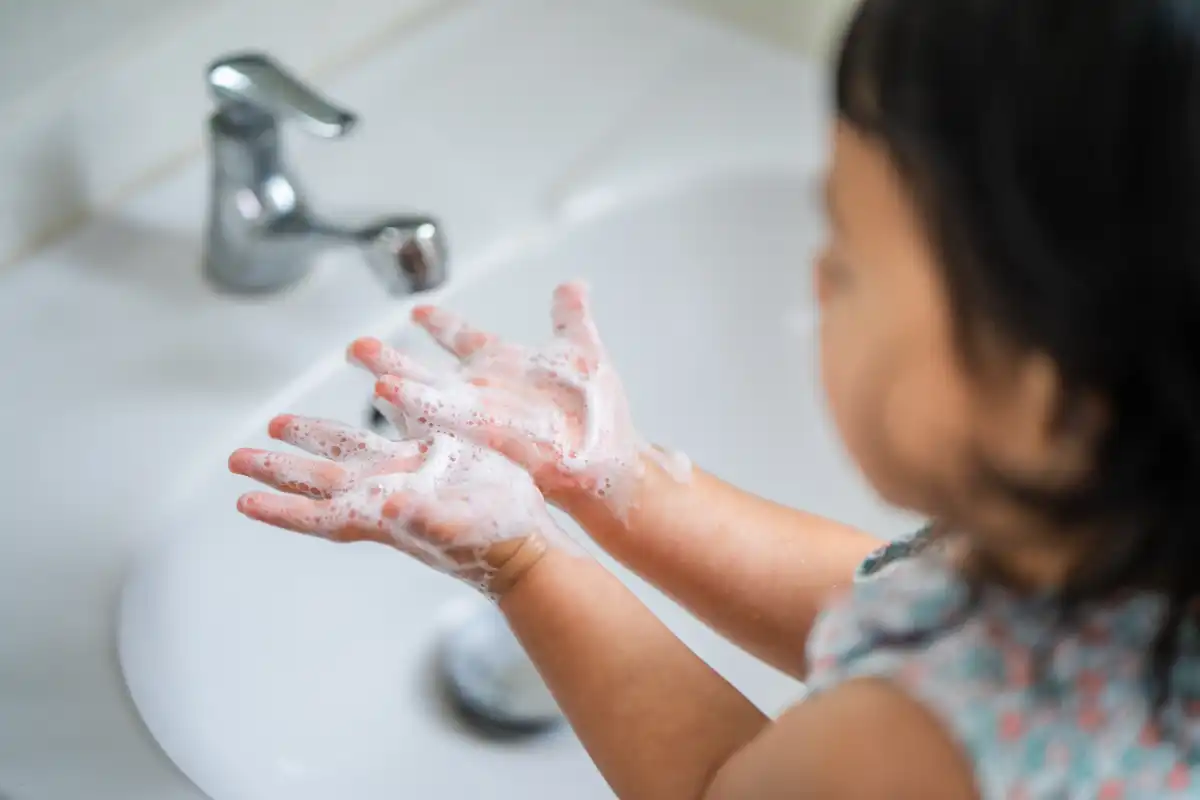
Apply soap or hand wash and rub your hands for 15–20 seconds – you can tell children this is as long as it takes to sing ‘Happy Birthday’ twice.
Make sure you wash the back of the hands, wrists, between the fingers and under fingernails.
Rinse and dry with a clean towel.
There are also antiseptic gels (hand sanitisers) that can be used instead of soap and water. The gel is rubbed into your hands to stop the spread of infections. You can purchase these from supermarkets and pharmacies.
Antibacterial soaps are not required and do not reduce the chance of getting an infection – ordinary soaps are adequate. Germs are removed by the mechanical action of washing, so rubbing hands together while washing them is most important.
Other good hygiene habits
Good hygiene reduces the chance of catching illnesses or passing them onto others. Good hygiene includes:
not sharing cups, cutlery or personal items like toothbrushes
encouraging children to cough or sneeze into their elbow
using tissues instead of hankies – teach your child to throw tissues into the bin as soon as they have used them and to wash their hands afterwards.
If your child is unwell with a virus or bacterial illness, keep them home from child care, kindergarten or school until they are well again. Use hot, soapy water to wash items (e.g. toys, teething rings) that a sick child has been in contact with during their illness.
Key points to remember
It is important to regularly wash hands thoroughly to prevent the spread of illness.
Wash hands for 15–20 seconds or as long as it takes to sing ‘Happy Birthday’ twice.
Encourage children to cough or sneeze into their elbow, and to use tissues instead of hankies.

Blog & News
Our Recent News And
Articles









The Answers You’re Looking For
What age groups and programs do you offer?

How do I enrol and what are the fees?

Start by booking a tour so you can see the centre and meet the team. Our team will guide you through the enrolment form and required documents. Fees depend on age group and booked days, and most families are eligible for the Child Care Subsidy. We will help you understand CCS and set up a simple payment schedule so there are no surprises.
How do you handle meals, allergies, and special diets?
What does safety and supervision look like at the centre?
How will I hear about my child’s day and progress?


A World of Opportunities Awaits. Enroll Your Child in A Session Now!