



A day at childcare: what your child actually does all day
One of the biggest questions parents have before enrolling is not fees or paperwork. It is much simpler: what will my child actually do all day?
Many families imagine children sitting in a classroom or just playing freely. In reality, a childcare day follows a structured but flexible routine designed around learning, social development and emotional confidence.
At Kaleidoscope Kids, our centres in Goodna, Booval, Logan Central, Redbank and Rothwell follow consistent routines so children feel safe, comfortable and know what to expect each day.
Why routines matter for young children
Young children thrive on predictability. When a child knows what comes next, their stress levels drop and confidence rises. This is especially important during the first few weeks of care.
If your child is still adjusting, you may find our guide on separation anxiety in children helpful. Many children experience it and routines are one of the fastest ways to reduce it.
Morning arrival and welcome
The day begins with arrival and greeting. Educators welcome each child individually and help them settle into the room.
This period is important for emotional development. Children practice independence by putting their bag away, washing hands and choosing an activity.
Parents often worry about drop-offs. A short, calm goodbye helps children adjust faster. If you are preparing for your first week, our article on the first day at childcare explains what to expect.
Free play and learning exploration
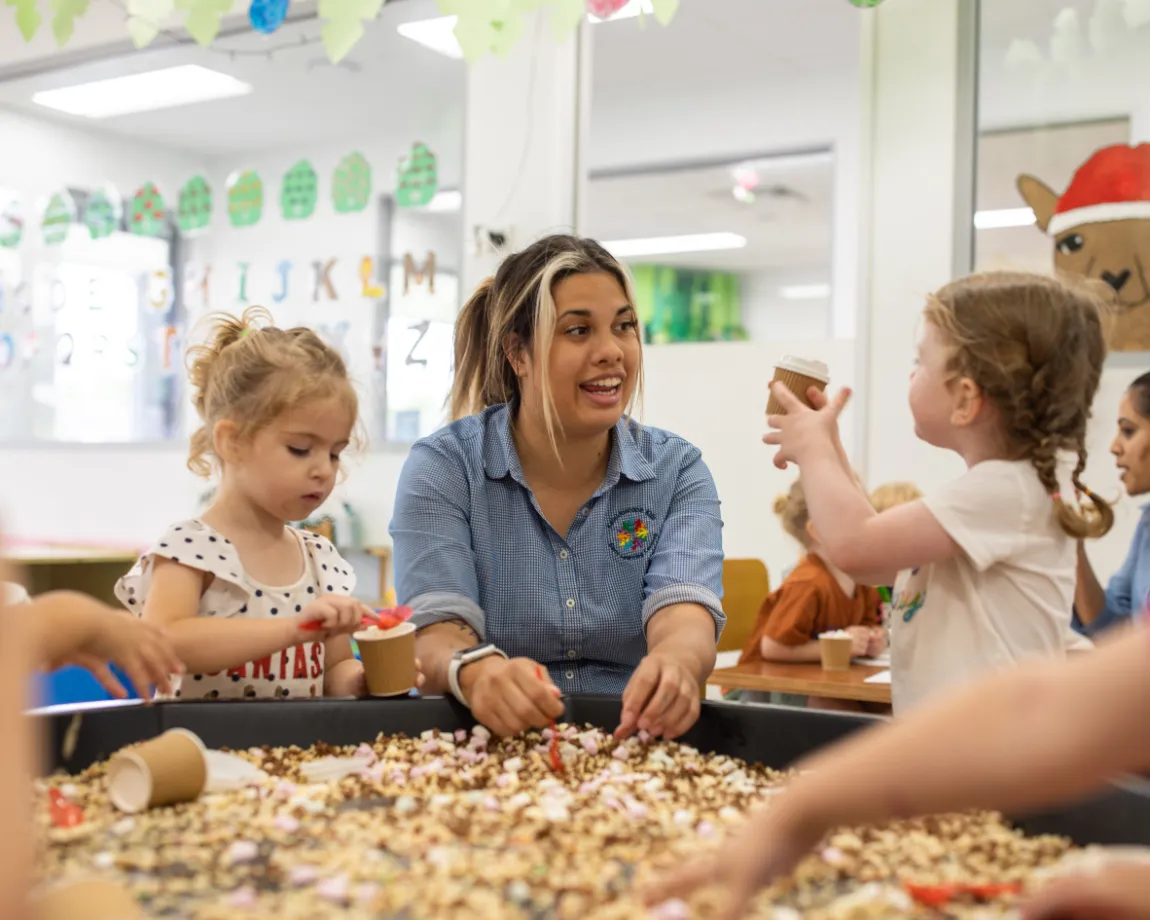
After arrival, children begin free exploration activities. These are not random play sessions. They are carefully designed learning experiences.
Activities may include:
Building and problem solving
Art and creativity
Sensory stations
Puzzles and thinking games
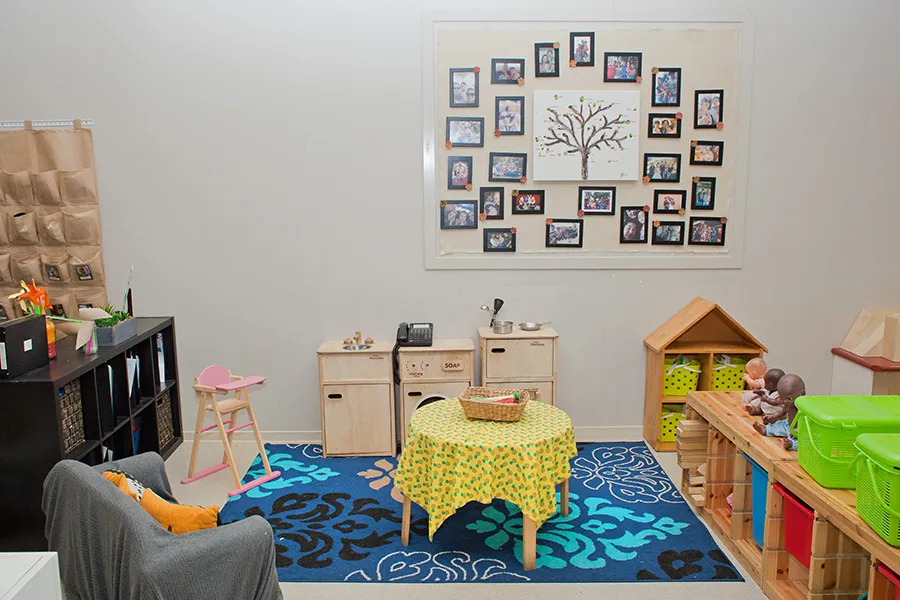
Role play
This is part of our early years learning program where children develop social, language and motor skills naturally through play.
If you want to understand why play is so important, you can read about play based learning and how it supports brain development.
Morning group time
Children then gather for group activities. This helps develop listening skills, confidence and social interaction.
Group time often includes:
Songs and music
Storytelling
Discussion and communication
Learning themes
These interactions are key for communication development. Social interaction in early childhood plays a large role in long-term emotional confidence. You can learn more in our guide on emotional development in early childhood.
Morning tea and nutrition
After activities, children enjoy a morning meal. At Kaleidoscope Kids all meals are provided, so families do not need to prepare lunchboxes each day.
Mealtimes are also learning moments. Children practice independence, table manners and conversation skills.
Good nutrition supports energy and concentration throughout the day. If you are curious about children’s eating habits, you may find our article on healthy food ideas for children helpful.
Outdoor play
Outdoor play is a major part of every childcare day. Children develop balance, coordination and confidence when they move their bodies.
Our centres have secure shaded playgrounds where children run, climb and explore safely.
Outdoor learning also improves sleep and behaviour. You can see examples of activities in outdoor play experiences.
Learning activities
After outdoor play, children participate in structured learning experiences based on age and development stage.
These activities build:
Problem solving
Fine motor skills
Language development
Creativity
For babies and younger toddlers, activities focus on sensory experiences. You can read more about sensory learning for babies.
Lunch and social development
Lunch is another social learning period. Children sit together, talk and build friendships.
Childcare friendships help develop empathy and emotional understanding. For younger children, you may find our article about social interaction in baby daycare interesting.
Rest and sleep time
After lunch, children rest. Younger children nap while older children enjoy quiet activities such as reading or drawing.
Rest helps memory and emotional regulation. We follow safe sleep guidelines and maintain calm sleep spaces.
If your child struggles with sleep routines, our safety advice on safe sleeping practices may help.
Afternoon play and learning
After rest time, children rejoin play-based learning activities. This period often includes art, building, puzzles and group games.
Children develop creativity and confidence as they choose activities and interact with peers.
Afternoon snack and pick-up
Late afternoon includes a snack and calm activities as families arrive for pick-up.
Educators share updates about your child’s day, and parents receive photo updates so they can stay connected even while at work.
Why childcare supports development
Quality early learning environments help children build independence, communication skills and emotional confidence.
Research consistently shows early childhood education prepares children for school readiness. Our kindergarten program builds on these foundations.
Planning your childcare start
If you are thinking about enrolling, visiting first helps your child feel familiar with the environment. You can arrange this through our enrolment and tour page.
Families also often want to understand fees beforehand. You can estimate your weekly out-of-pocket cost using our child care subsidy calculator.

A childcare day is carefully structured to balance learning, play, rest and social development. Children are not just supervised, they are supported to grow, make friends and build confidence every day.
Once families understand the routine, most worries disappear. Children adapt quickly, and many end up excited to attend each morning.

Blog & News
Our Recent News And
Articles









The Answers You’re Looking For
What age groups and programs do you offer?

How do I enrol and what are the fees?

Start by booking a tour so you can see the centre and meet the team. Our team will guide you through the enrolment form and required documents. Fees depend on age group and booked days, and most families are eligible for the Child Care Subsidy. We will help you understand CCS and set up a simple payment schedule so there are no surprises.
How do you handle meals, allergies, and special diets?
What does safety and supervision look like at the centre?
How will I hear about my child’s day and progress?


A World of Opportunities Awaits. Enroll Your Child in A Session Now!