

Kindy drop-offs: separation anxiety tips for calm mornings
Starting kindy can be exciting and a little tough at the same time. Many families tell us that the first weeks bring big feelings at the gate. This guide is a calm, step-by-step plan to help your mornings feel lighter. It is made for kindy mornings, busy parents, and kids who need a gentle path through separation anxiety.
What separation anxiety looks like at kindy
Separation anxiety is a normal stage of development. It can show up as tears at drop-off, a tight tummy, or a child who will not let go of your hand. At kindy, it often rises on Monday and after holidays, then fades as routines settle. When we talk about separation anxiety, we are not labelling a child; we are naming a feeling so we can work with it. A child can love kindy and still feel wobbly at the door. Your steady steps help the feeling pass.
Why mornings feel hard at kindy
Mornings have many moving parts. You are trying to wake up, dress, eat, pack, travel, and arrive on time. Your child is moving from home to kindy, from family rhythm to the room rhythm. That shift can spark separation anxiety. It can also stir other feelings like worry, nerves, and jitters. The trick is to lower the number of choices at the door. When childcare mornings are predictable, the brain relaxes and the body follows.
Weekend reset for kindy
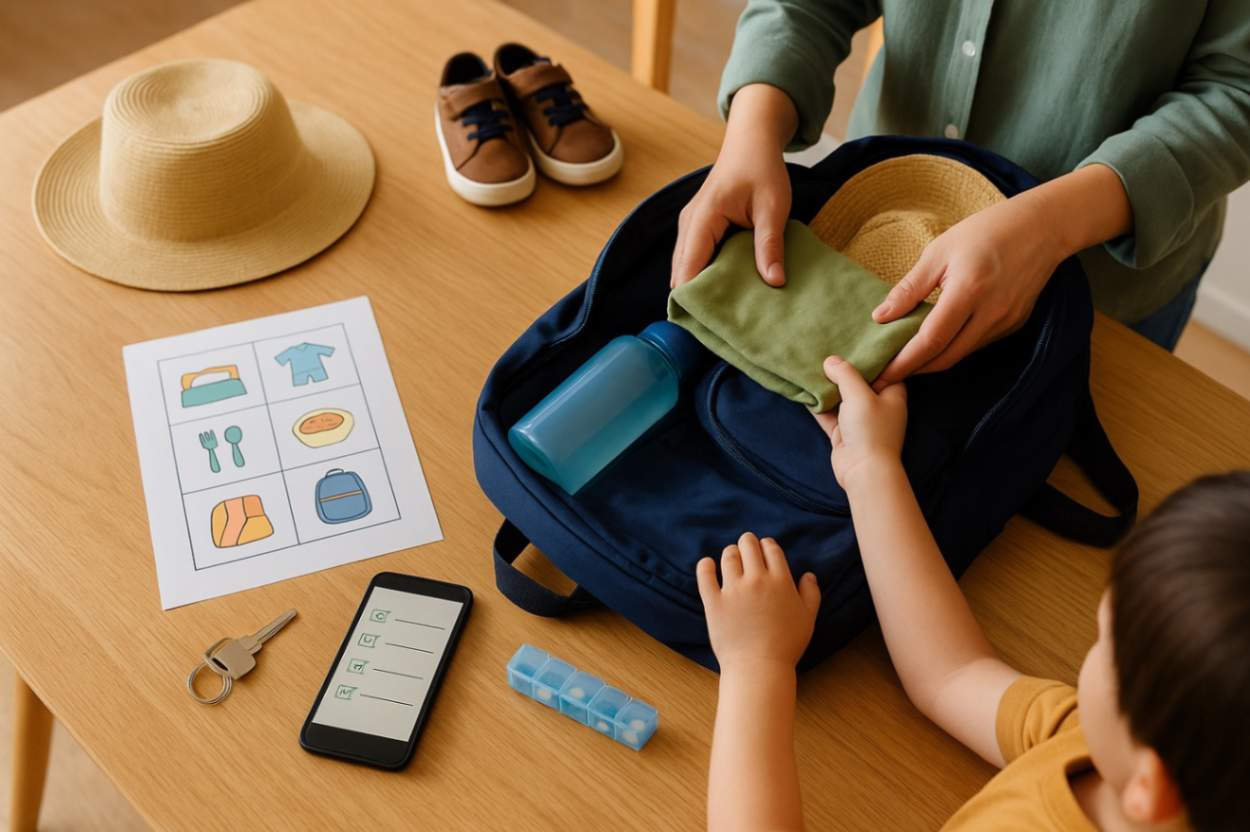
A small reset on Saturday and Sunday can make kindy easier. Use the weekend to set up the week, not to add more pressure. Make a short list together. Check the bag, the hat, the drink bottle, and spare clothes. Lay out shoes near the door and place the kindy badge or name label where your child can see it.
Visit the park or the library, then come home before anyone is overtired. Going out and coming home calmly teaches the body that change can be gentle, which helps with separation anxiety on Monday.
Sunday evening for kindy
On Sunday, rehearse the morning steps. Keep it light. Dress, eat, pack, and put the bag by the door, then relax. A five-minute run-through is enough. Write a tiny story with pictures about going to childcare. Read it at bedtime. Pack a comfort item if your centre allows it.
Set the alarm ten minutes earlier than usual. The goal is a soft start, not a perfect start. A calm Sunday sets you up for a smoother childcare handover and helps quiet separation anxiety.
A simple morning plan for kindy
Keep the plan short and the order the same. Wake up, dress, breakfast, teeth, bag, shoes, go. Put a visual plan at child height so you can point instead of nag. Say less and show more. Use a friendly timer or a song to move between steps. Save big talks for the afternoon. This steady flow gives children a path to follow when separation anxiety and other attachment worries try to pull attention away from kindy.
The walk or drive to kindy
Pick one route to kindy and stick with it. Play the same short playlist or have a quiet car. Name one nice thing about the day ahead. If you walk, choose a landmark where you start your goodbye ritual. If you drive, park in the same spot. These cues tell the brain, “This is the kindy path.” The more familiar the path, the less room there is for separation anxiety to grow on the way.
A goodbye ritual that works at kindy
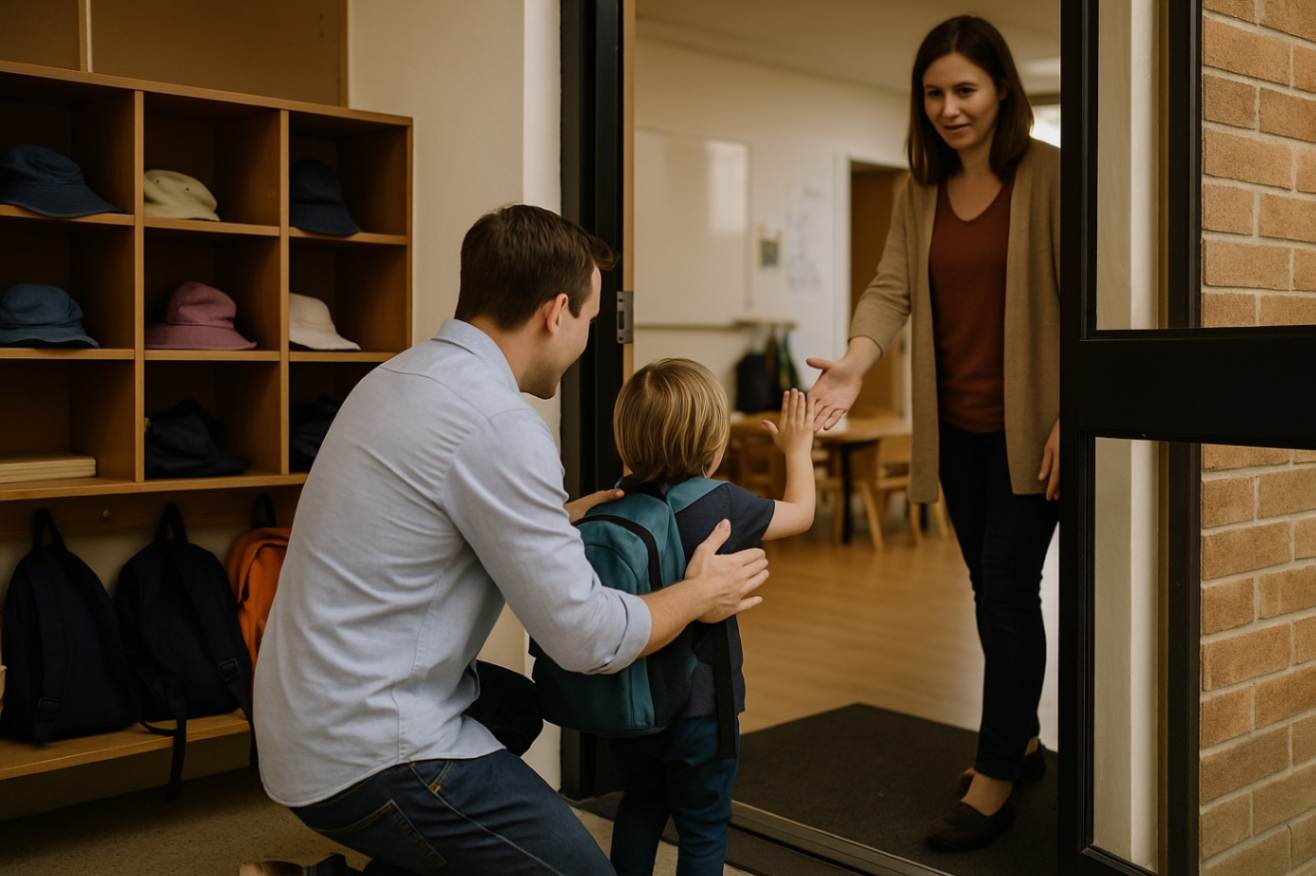
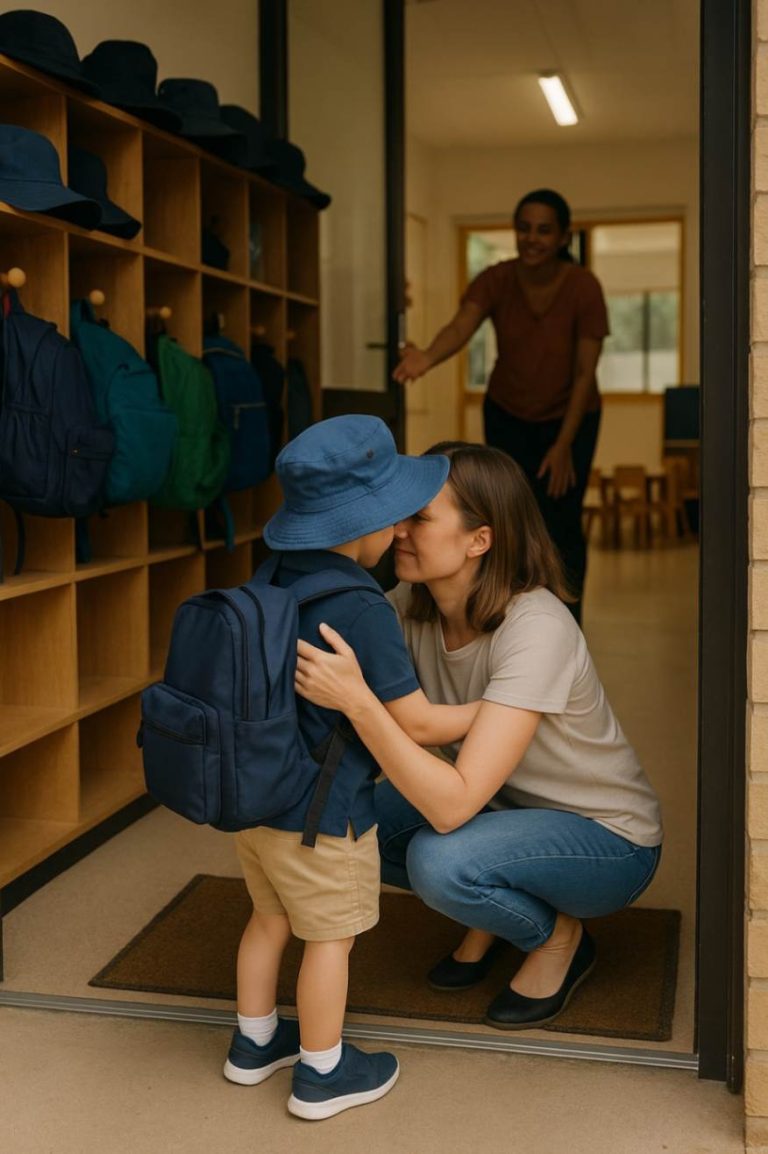
Goodbyes work best when they are short and steady. Create a small ritual you can repeat every day at childcare. It might be a hug, two slow breaths, a high-five, and a wave at the window. Say the same words each time: “Hug, high-five, see you this arvo.” Your face, your voice, and your posture all say, “You are safe at kindy.” If your child cries, pass them to the teacher, do the ritual, and leave. Long goodbyes feed separation anxiety. Short goodbyes train the brain to handle the moment.
Working with child educators at kindy
Talk with the room leader about drop-offs. Share one or two things that help. Ask what the class does in the first ten minutes so you can mention it on the way to kindy. Some rooms start with a helper job, a quiet corner, or outdoor play. If your centre is part of Kaleidoscope Kids, ask the team for ideas they have seen work for other children. When home steps match kindy steps, the transition gets easier and separation anxiety fades faster.
Keep your talk short and clear
Use statements more than questions. Say “It’s time to put on shoes,” not “Do you want to put on shoes?” Avoid long explanations at the door. If you need to explain, do it later in the day. Simple words help kindy handovers because the brain can follow them even when separation anxiety, fear, or reluctance tries to take over. Your confidence is part of the message.
Supportive tools
Visual schedules, small checklists, and routine cards are powerful. A pocket photo of family, a smooth stone, or a tiny note in the lunchbox can be a comfort. Some call this “co-regulation,” but you can just call it calm teamwork. At childcare, staff can mirror these tools with a room timetable and a regular helper list. When the same tools appear at home and at kindy, separation anxiety has fewer chances to flare.
Sleep and food
Sleep sets the stage for kindy. Keep bedtime steady, even on weekends. Turn off screens an hour before bed. Offer a simple breakfast with protein and fruit. Have water ready. Energy dips can look like clinginess or tears, which can be mistaken for separation anxiety. A steady sleep and food rhythm gives your child the fuel to handle the childcare morning.
If kindy mornings are still rough
If you try these steps for two weeks and kindy is still heavy, speak with the teacher. Pick one small goal for the next week, like walking to the door without stopping. Ask for a check-in call after you leave so you do not wait in worry. If your child needs more help, your GP or child health nurse can guide you to local supports. Many families move through tough starts with time, practice, and a team plan for kindy. Even strong separation anxiety can ease when the steps stay steady.
Tips for families with more than one child
Siblings change the dance at the door. Give each child a job. One carries the hat, one carries the water bottle, one opens the gate. Jobs make kids feel part of the childcare team and reduce jostling. If a toddler also feels unsure, plan a tiny reward after drop-off, like a short stop at the park. This keeps the flow moving and lowers family stress that can feed separation anxiety.
Tips for neurodivergent kids
Some children need a different pace or a softer start. Ask your childcare about quiet arrival options, noise-cancelling headphones, or a first job that feels good on the senses. A short social story with photos of the room can help. So can a visual map of the day. These tools reduce parting stress and help the body feel safe, which lowers separation anxiety without forcing anyone to “be brave” before they are ready.
Sunday story
A home-made story can help the brain rehearse. Write six short lines with pictures: “On Monday I wake up. I get dressed. I eat brekkie. I pack my bag. I go to kindy. I give Dad a hug. I help water the garden. I play. Dad comes back.” Read it each night. Send a copy to kindy if the teacher wants it. Stories turn unknown steps into a path, which cuts the power of separation anxiety.
Community
Make the walk to kindy part of your local life. Say hello to the lollipop person, the neighbour, or the shop owner. Familiar faces give safety cues. When a child feels rooted in their street and their kindy, anxious feelings have less space to grow. If your centre is part of Kaleidoscope Kids, you may notice community boards with local events. Pick one small thing to try on a weekend so the world around childcare feels friendly.
Gear that helps
Keep gear simple. A backpack that opens easily, a lunchbox your child can manage, and shoes they can put on by themselves are worth it. Independence shrinks drop-off dread because each success tells the brain, “I can do this.” Label everything. Make a small packing station near the door. When gear is sorted, the kindy doorway is quieter, and separation anxiety has fewer sparks.
Kindy for parents who work shifts
If you work early or late, plan the night before. Pack the bag, lay out clothes, and put shoes by the door. Share the plan with the adult who does drop-off. Use the same ritual and words. If your centre can offer a soft start time, ask about it. A steadier handover helps everyone and is one of the best ways to lower separation anxiety linked to rush and fatigue.
After holidays or illness
Expect a wobble after a break. Treat the first week back like the first week of term. Bring back the visual plan, the story, and the goodbye ritual. Leave a little earlier. Tell the teacher what has changed. Fresh routines at home make old kindy paths feel new again, and separation anxiety often pops up. That is normal. Your steady steps will bring it down.
Parent feelings
Your feelings matter too. It is common to feel your own jitters, worry, or a tug in your chest. Take three slow breaths before you reach the gate. Have a kind line ready for yourself, like “I can do calm and firm.” Plan a small treat after drop-off. When you look after your own nervous system, you send a clear signal that kindy is safe, which helps ease separation anxiety for everyone.
FAQ for calm mornings
What if my child cries for a long time?
Most children settle within minutes of starting a task at kindy. Ask for a quick call after drop-off. If crying lasts, meet with the teacher to adjust the plan.
Should I sneak out?
It can break trust. Say goodbye and leave. Clear, honest exits are the best cure for separation anxiety.
How long should the ritual be?
One minute is plenty. The power comes from doing the same steps every day at childcare.
Can I stay for a bit?
Ask the teacher. A short, planned stay can help at first, but open-ended stays can fuel separation anxiety.
What if my child refuses to get in the car?
Bring the plan to the start of the driveway. Use the visual steps and the song. Make the first move small, then praise it.
Checklist for kindy mornings
bag packed the night before
shoes by the door
visual plan at child height
goodbye ritual chosen
five minutes early for travel buffer
calm words ready for you and your child
Kaleidoscope Kids
If your child attends a centre in the Kaleidoscope Kids family, speak with your local team about arrival choices, comfort items, and room routines. Their staff see many children move through drop-off nerves each year. They can share gentle tricks that fit your kindy. They can also help you match home steps to class steps so your child feels the same calm story in both places. When adults tell the same story, separation anxiety loses steam.
Kindy is a big step
Kindy is a big step, and big steps invite big feelings. You do not need magic to make mornings work. You need a simple plan, a steady ritual, and a few kind tools. Aim for progress, not perfect days. Each calm handover writes a new memory. Over time the brain links kindy with safety, friends, and fun.
The doorway stops being a battle and becomes a bridge. This is how steady, simple steps turn separation anxiety down and let your child walk into kindy with a lighter heart.

Blog & News
Our Recent News And
Articles









The Answers You’re Looking For
What age groups and programs do you offer?

How do I enrol and what are the fees?

Start by booking a tour so you can see the centre and meet the team. Our team will guide you through the enrolment form and required documents. Fees depend on age group and booked days, and most families are eligible for the Child Care Subsidy. We will help you understand CCS and set up a simple payment schedule so there are no surprises.
How do you handle meals, allergies, and special diets?
What does safety and supervision look like at the centre?
How will I hear about my child’s day and progress?


A World of Opportunities Awaits. Enroll Your Child in A Session Now!