


Kindy weekend reset: calm steps for Monday
Weekends can set the tone for the week. If Monday mornings feel rocky, a simple weekend rhythm can help your child feel ready for kindy. Some kids feel a knot in the tummy on school days. That feeling has a name: separation anxiety. When we plan calm steps on Saturday and Sunday, separation anxiety often shrinks, and Monday starts to feel possible again. This guide gives you a gentle plan that fits real homes and busy lives.
Why a weekend reset helps for kindy
A reset is not a big overhaul. It is a light tidy of habits, sleep, and simple plans. Many families tell us that one or two small changes make the biggest difference. A short list on the fridge can cut arguments and last minute rush. It also gives your child a sense of what is coming next, which is one of the best ways to ease separation anxiety. When the week has a shape, the brain relaxes. The more your child can predict the steps before kindy, the calmer the handover feels. Over time, that steadiness turns into confidence.
Your Saturday plan
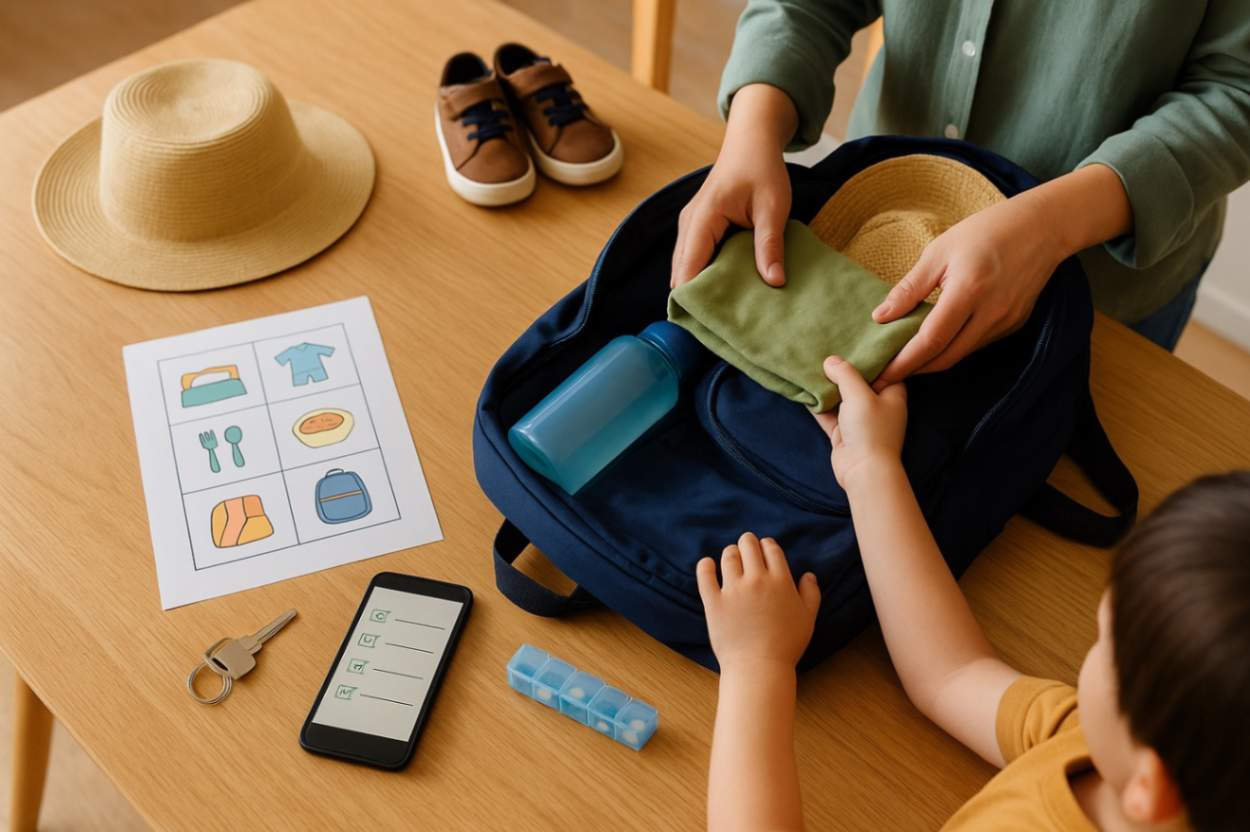
Keep Saturday simple. Start with a slow brekkie and a chat about one fun thing for the day. Then do a light bag check: hat, water bottle, spare clothes that still fit, and a jumper if it is cool. Let your child help tick the list so they feel in charge. This shared job builds certainty, and certainty is the quiet rival of separation anxiety. When kids know where their things are, they feel more ready for kindy.
Mid morning, plan a short outing that ends well. Visit the park your child likes, or the library for a quick story time. Leave while things are still calm. That way your child links outings with a good end, not a meltdown. After lunch, set a small task like laying out Monday shoes or sticking name labels on new items. Keep it playful. Put music on.
When we place small wins in the day, the body learns that change can be gentle even when separation anxiety asks for more worry time. If your kindy allows it, add a small comfort item to your child’s bag now so you are not rushing on Monday.
Make Saturday arvo about rest and routine. Try a screen free hour before dinner for drawing, blocks, or puzzles. Keep bedtime steady, with the same order each night: bath, pyjamas, story, cuddle, lights. Short and predictable is the goal.
If your child asks hard questions, answer in a few words and point to the plan: “We have our list. We will walk to kindy together. You will take Teddy.” The plan is your anchor when separation anxiety starts to rise.
Your Sunday plan
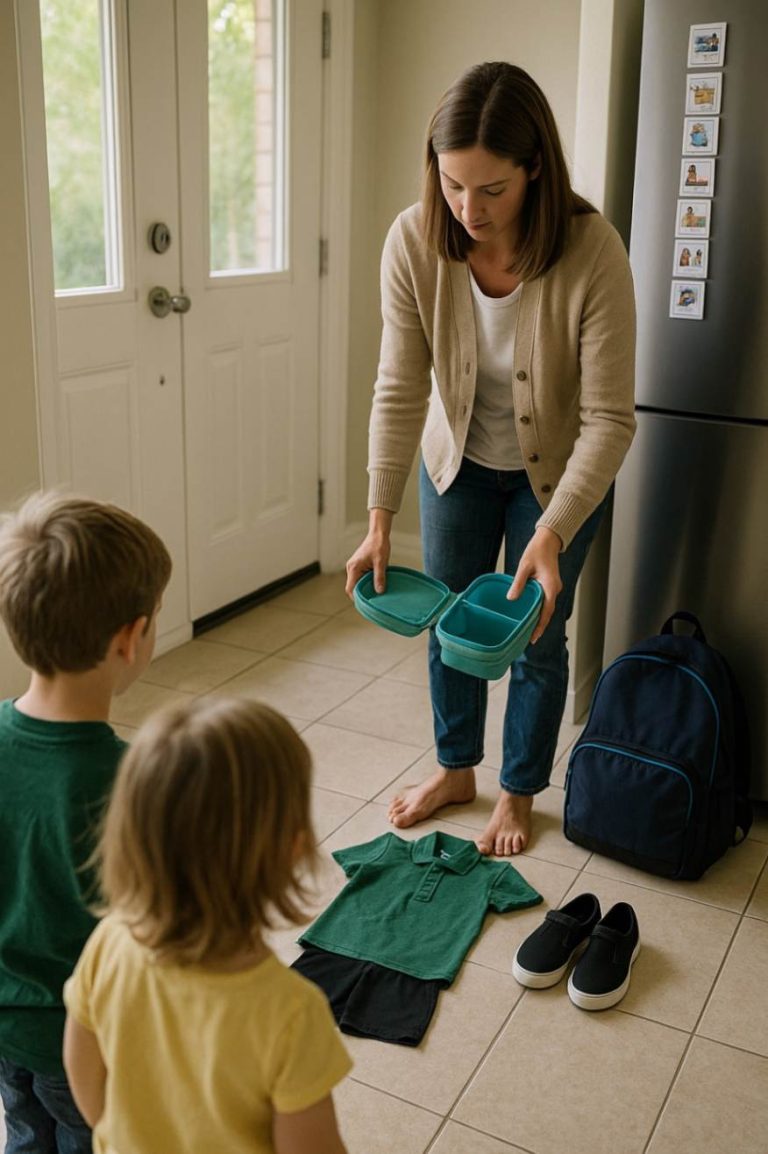
Sunday is for rehearsal without pressure. After brekkie, do a mini run through of the morning steps: dress, eat, pack, put shoes by the door, then relax. Keep it light and playful. If your child likes timers, set a gentle chime. If they love stickers, give one for each step. This is not a test. It is a game that tells the brain, “We can do this,” even when separation anxiety whispers, “This is too big.” The more times your child practises the path to kindy in a calm way, the easier it feels on real school days.
In the arvo, visit kindy if the grounds are open, or walk past the gate and wave. Name three things your child likes there: the trikes, the water table, the helper chart. Familiar places lower stress. At home, pick tomorrow’s clothes together, prepare the lunchbox, and pop a small comfort item in the bag if the kindy allows it. These small moves make Monday feel less unknown, which is half the work when separation anxiety shows up. You can also plan your route to kindy and pick a backup route so traffic does not add pressure.
Tools that make it easier
A visual plan works wonders. Draw five pictures in order: wake up, get dressed, eat, pack, go. Stick it at your child’s eye level. Point to it rather than telling them ten times. A simple countdown helps too: “Five minutes till we put shoes on,” then “Two minutes,” then “Time for shoes.” If your child likes stories, write a short “first day” story with their name and a happy ending. Repeat it each night.
These tools give shape to the morning and give your child something to hold onto when separation anxiety tries to take over. You are building a path the brain can follow, even when feelings are loud.
How to talk with teachers
Teachers see many children move through big feelings each year. Send a short note or have a quick chat at pick up about what helps your child: a wave at the window, a helper job after arrival, or a quiet corner for the first few minutes. Keep it short and clear. Ask how the teacher prefers to handle drop offs, and agree on a farewell plan you can keep. When home and kindy use the same steps, your child gets a steady message, which is very helpful when separation anxiety is loud. If a small comfort toy is allowed, label it and agree where it will live during the day.
A calm farewell that sticks
Farewells work best when they are the same each time. Try a short script: “Hug, high five, see you arvo.” Pair it with two slow breaths together at the door. Keep your body language steady. If you are confident and kind, your child feels it. If they cry, stay calm, pass to the teacher, do your ritual, and leave.
Long goodbyes make the feelings bigger. Short ones teach the brain, “I can do hard things, and my grown up always comes back.” This is the core lesson that slowly quiets separation anxiety. If the morning goes off the rails, reset after school with cuddles and a short chat about what helped and what you will try next time.
Care for yourself too
Kids borrow our calm. Try to sleep well on Sunday night, pack what you need, and leave extra time for traffic. If you feel tight in the chest, take three slow breaths before you get out of the car. Have a kind word ready for yourself even if the morning is rough: “This is hard, and I am doing my best.” A steady parent makes a steadier handover, and that helps more than you might think when separation anxiety is part of the picture. Plan a small treat for yourself after drop off, like a coffee or a walk. When your cup is not empty, your patience lasts longer.
What if mornings still feel hard
If you try these steps for two weeks and mornings are still heavy, talk with the teacher about a short, focused plan. Pick one small goal for the next week, like walking to the door without stopping, or handing the bag to the teacher. Keep using the same farewell ritual. If your child needs extra support, your GP or a child health nurse can guide you to local services. You can also ask your kindy about small groups that build social confidence. Many kids move through tough starts with time, practice, and gentle support, even when separation anxiety hangs around.
Sample weekend timetable
Saturday
7.30 am brekkie and bag check
10.00 am park or library, head home before tired
2.00 pm quiet play, lay out Monday shoes
6.00 pm dinner, then bath, story, cuddle
7.30 pm lights out
Sunday
8.00 am brekkie, mini morning run through
10.30 am walk past kindy and wave at the gate
1.00 pm prep lunchbox and pack comfort item if allowed
4.00 pm screens off, draw or read
6.00 pm dinner, then story with your “first day” theme
7.30 pm lights out
A quick checklist for the fridge
• hat, water bottle, spare clothes, labelled
• shoes by the door, bag packed
• visual plan at child height
• farewell words chosen
• teacher update sent if needed
• leave five to ten minutes earlier than usual
About Kaleidoscope Kids
Families near Goodna, Logan Central, Booval, Redbank, and Rothwell can find a Kaleidoscope Kids centre close by. Many rooms run kindy programs and help children build steady routines. If your hours are unusual, Redbank and Rothwell also offer 24 hour care options on 6 days, which can help families who work late or start before dawn.
You can reach each site to ask about tours, start dates, and room routines that suit your child’s pace. Local details and contacts are listed on the website, with Goodna at 45 Alice Street, Logan Central at 143 Wembley Road, or Redbank at 57 Brisbane Road, you may find a kindy close to your regular route.
How to use this guide with your kindy
Bring this plan to your next chat with your child’s teacher. Ask what parts match the room routine and what parts you can tweak. If your child attends kindy in a room with mixed ages, ask the educator to share their arrival flow so your farewell fits the class. The more your home steps line up with the kindy’s steps, the faster the mornings settle. You can also ask if the room uses a helper list, a visual timetable, or a feelings chart.
These small tools give anxious feelings a place to go, so separation anxiety does not have to shout to be heard. If there are home languages in play, add a few key phrases to the visual plan so your child sees their own words in the morning steps.
Ways to weave calm into the week
Little habits help. Put the school bag on the same hook each afternoon. Keep your car keys, hat, and sunscreen in one basket near the door. Make a simple music playlist that you always play while packing lunches. These cues tell the brain it is “get ready” time, which takes some load off your words.
If you walk to kindy, make the same turns each day and pick a landmark where you start your goodbye ritual. If you drive, park in the same area and take three slow breaths before you unclip the seatbelt. When the steps are the same, the body relaxes faster and separation anxiety has less space to grow.
Help your child name feelings
Kids do well when they can name what they feel. Teach a few simple words like “nervous”, “sad”, “excited”, and “proud”. Make a little scale on your fingers, one to five, so they can show how strong the feeling is. Offer one or two coping tools, like a pocket photo, a smooth stone, or a small note in the lunchbox. Keep it light. The goal is to give feelings a shape, not to erase them. When a child can say, “I feel nervous but I can do it,” separation anxiety starts to loosen its grip.
These feelings can look like tummy butterflies, a shaky start at the door, nerves at the gate, a quick tearful drop-off, or a quiet parting worry. Some kids call it the goodbye blues; others just feel attachment worries or a transition wobble. All of these are normal, and they pass faster when the steps are simple and kind.
Build a short story
A home made story works wonders. Write five short lines with a picture for each: “On Monday I wake up. I get dressed. I eat brekkie. I pack my bag. I go to kindy. I give Mum a hug. I help water the plants. I play. Mum comes back.” Read it each night. Send a copy to school if your teacher wants it. Stories turn the unknown into a path. The more times your child hears their own plan, the more the body trusts it, and the less separation anxiety needs to shout.
Plan for sleep
Sleep powers mornings. On Friday night and Saturday night, try to keep bedtime close to your weekday time. Keep screens off for the hour before bed. Offer a calm snack if dinner was early. A bath, a story, and a short cuddle signal that the day is done. When sleep is steady, the early start for kindy feels easier, and separation anxiety has less fuel.
Bring play into practice
Use play to rehearse tricky parts. Set up a door and take turns being the parent, the child, and the teacher. Keep it silly. Use toys as the “class”. Practise the ritual: walk to the door, breath, hug, high five, wave. Then swap roles. Laughter lowers stress and gives the body a safe way to try the moves. Many families find that five minutes of play on Sunday arvo makes Monday feel lighter, even if separation anxiety has been hanging around.
Care for siblings
If you have more than one child, give each a small job. One can hold the list. Another can carry the water bottle. Jobs make children feel part of the team and cut jostling at the gate. If a toddler also feels wobbly, plan a tiny reward for them after the handover, such as a stop at the park on the way home. This lowers the chance that sibling drama will spark extra tears at kindy.
Use clear language
Keep your words short and steady. “It is time to get dressed.” “Shoes on now.” “We are walking to the gate.” Avoid long lectures in the busy minutes. Save big talks for the arvo when everyone is rested. When the words are few and the steps are clear, the brain can follow even if separation anxiety is trying to pull attention away.
Check in with your kindy
Ask your kindy if they have a calm start option. Some rooms allow an early arrival to settle before the crowd. Others offer a helper job, like feeding the fish or setting out crayons. These small roles give children a bridge from your arms to the day. If your child’s kindy is part of Kaleidoscope Kids, ask the team at your local site what has worked for similar children. Their ideas come from daily practice and can make a big difference.
Make room for culture and comfort
Think about family culture too. You might have a morning prayer, a short poem, or a special gesture from your own childhood. Keep it if it helps. Share it with the teacher if you like. When a child sees their family ways valued at kindy, they feel safe. Safety is the soil where courage grows, and that is how separation anxiety slowly fades.
Your calm Monday path
On Monday, wake your child with a smile, keep the lights soft, and follow your five step plan. Play your “get ready” playlist. Keep breakfast simple. Put the bag by the door. Name one good thing about the day. Leave five to ten minutes early. At the gate, do your ritual, hand over, and walk. If tears come, remember that feelings rise and fall like waves. Most children settle within minutes. Trust the plan. Kindy will call if they need you.
A word from Kaleidoscope Kids
Families near Goodna, Logan Central, Booval, Redbank, and Rothwell can find a Kaleidoscope Kids centre close by. Many rooms run kindy programs, from early learning for little ones to kindergarten for older children. If your hours are unusual, Redbank and Rothwell also offer 24 hour care on some days to help families who work late or start early. You can check addresses and phone numbers on the website and book a tour when you are ready.
Bringing it all together
Mondays will never be perfect, and they do not have to be. The aim is a routine that feels kind and repeatable. A weekend reset gives you room to practise without the weekday rush, and it gives your child a clear path into the week. Keep the steps small, keep the tone warm, and keep the ritual the same. Over time, the body learns the pattern, the mind trusts the plan, and the walk to the door gets lighter. That is how a steady weekend can make kindy mornings calmer, even when separation anxiety has been part of your year.


Blog & News
Our Recent News And
Articles









The Answers You’re Looking For
What age groups and programs do you offer?

How do I enrol and what are the fees?

Start by booking a tour so you can see the centre and meet the team. Our team will guide you through the enrolment form and required documents. Fees depend on age group and booked days, and most families are eligible for the Child Care Subsidy. We will help you understand CCS and set up a simple payment schedule so there are no surprises.
How do you handle meals, allergies, and special diets?
What does safety and supervision look like at the centre?
How will I hear about my child’s day and progress?


A World of Opportunities Awaits. Enroll Your Child in A Session Now!